Why Older Homes in Stamford Are Prone to Foundation Problems
If you own a home in Stamford, there is a good chance your house has stood for decades, maybe even a century or more. While that kind of history adds character, it also means your foundation has weathered countless freeze-thaw cycles, heavy Nor'easter rains, and shifts in the soil beneath it. Older homes were often built with materials and methods that simply do not hold up the way modern engineered systems do, and the signs of foundation problems can be easy to overlook until they become serious.
The geology around Stamford does not help. Much of the area sits on glacial till and rocky soil that expands when wet and contracts when dry, putting constant pressure on basement walls. Add in the fact that many historic homes lack modern drainage or waterproofing, and you have a recipe for older home foundation repair needs that show up as cracks, leaks, and uneven floors. Understanding what to look for below grade is the first step toward protecting your investment.
Basement Wall Cracks: What They Mean and When to Worry
Not all basement wall cracks are created equal. Hairline vertical cracks in a poured concrete wall are often just shrinkage cracks that appeared as the concrete cured, and they may be harmless for years. But when those cracks widen, when they run diagonally, or when they appear in block walls as stair-step patterns, they are telling you something important about movement and water pressure. Horizontal cracks are especially concerning because they often signal that the wall is being pushed inward by soil or frost.
In older Stamford homes, cracks frequently come with staining, efflorescence (that white powdery residue), or actual dampness. If you see any of these, it is worth having a professional take a look. Left alone, small cracks let in water that can lead to mold, damaged finishes, and further deterioration of the foundation itself. A proper assessment will tell you whether you are looking at cosmetic settling or the early stages of a structural issue that needs Foundation Waterproofing.
Bowing Basement Walls and Other Structural Warning Signs
A bowing basement wall is one of the clearest signs that your foundation is under stress. You might notice the wall leaning inward, a horizontal crack running along its length, or gaps opening up where the wall meets the floor joists above. In historic homes, this often happens because the original drainage was inadequate and years of hydrostatic pressure have slowly pushed the wall out of alignment. Bowing walls do not fix themselves, and ignoring them usually leads to more expensive repairs down the road.
Other structural clues include doors and windows that stick or no longer latch properly, floors that feel sloped or bouncy, and gaps between exterior walls and the foundation. These symptoms often point to settlement or movement that affects the whole house, not just the basement. If you are seeing any of them, it is time to bring in someone who understands historic home waterproofing and structural repair, rather than waiting for the problem to worsen. A free estimate from a local specialist can give you clarity on what is actually happening below grade.
Moisture, Musty Odors, and the Case for Historic Home Waterproofing
Older homes in Darien and throughout the Stamford area often have basements that were never designed to be dry. Musty smells, damp concrete, peeling paint on the lower walls, and rust on stored items are all signs that moisture is finding its way in. Sometimes the source is obvious, like a visible crack, but often it is water seeping through porous masonry or coming up through the floor. That persistent dampness creates the perfect environment for mold and can quietly weaken the foundation over time.
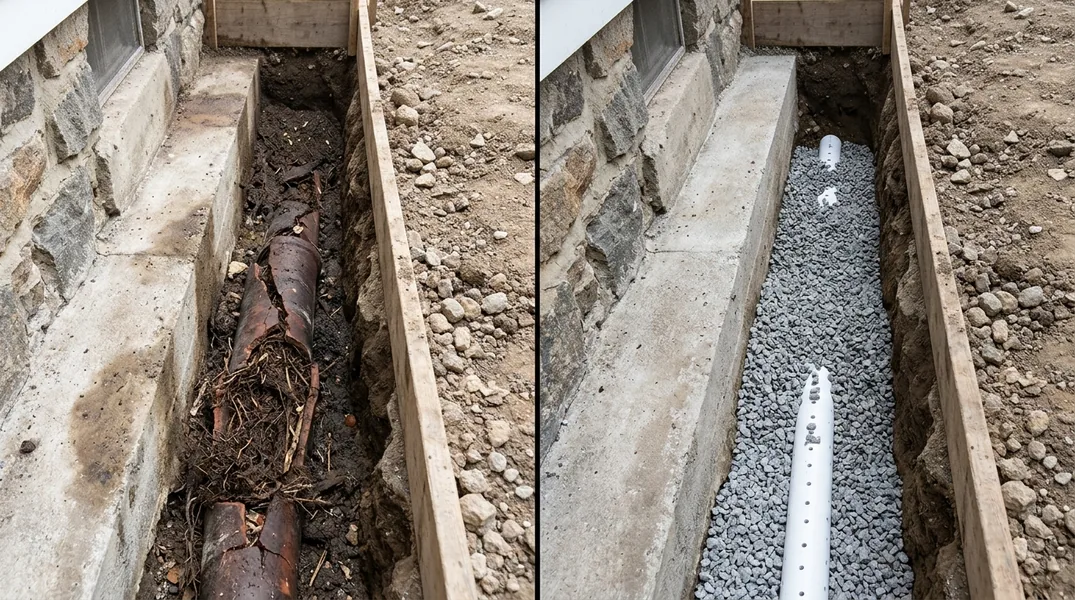
This is where Basement Waterproofing tailored to older construction makes a real difference. Modern solutions like an Interior Drain Tile System capture water before it reaches your living space, while Exterior Basement Waterproofing addresses the problem at its source by redirecting groundwater away from the walls. For historic homes, the right approach depends on the specific construction and the type of foundation, which is why an on-site evaluation matters more than a one-size-fits-all fix.
Foundation Problems Near Me: When to Call a Stamford Professional
It can be tempting to put off foundation work, especially when the signs seem minor or the basement is out of sight. But foundation issues tend to get worse, not better, and the cost of waiting usually shows up as more extensive repairs later. If you have noticed cracks that are growing, walls that are leaning, or a basement that stays damp no matter what you do, it is worth getting a professional opinion. Homeowners in Norwalk and Greenwich face many of the same conditions, and local experience with older housing stock matters when diagnosing the cause.
Stamford Waterproofing works with homeowners throughout the area to identify foundation problems early and recommend solutions that fit the age and construction of the home. Whether you need a simple crack repair or a full waterproofing system, the first step is a conversation. You can call (475) 268-0034 or request a free estimate to get started. If you are curious about what different solutions typically run, our pricing page offers a helpful starting point before you schedule a visit.
Looking for a professional basement waterproofing contractor in Stamford? Stamford Waterproofing responds fast for all your basement waterproofing needs.
Get a Free QuoteOur services: Basement Waterproofing · Interior Drain Tile System · Exterior Basement Waterproofing