



Foundation Crack Repair in Stamford: Stop the Water Before It Finds the Floor
Stamford sits on glacial till over gneiss and schist, and that shallow seasonal water table around the Cove and Shippan Point pushes water against basement walls every spring. If you have a crack in a poured wall or a failing mortar joint in a fieldstone foundation, Foundation Crack Repair in Stamford is the first line of defense before that seepage turns into a wet basement. We inspect the crack, identify whether it is a shrinkage crack, a settling crack, or a structural warning sign, and match the repair to the cause. No one-size-fits-all patches, no guessing. From the 1920s foursquares in Glenbrook to the 1990s colonials on the north hills, we know how these walls fail and what it takes to seal them. Call Stamford Waterproofing at (475) 268-0034 for a free basement inspection.
Why Cracks Open in Stamford's Older Foundations
Freeze-thaw cycles work Stamford walls hard. Water enters a hairline crack, freezes, expands, and widens it a little more each winter. The 1900s-1930s colonials in Springdale and near the Downtown core often have fieldstone or early poured walls with original mortar that has turned brittle. The 1940s-1960s Capes in Newfield and Turn of River sit on partial basements where the frost line and poor grading concentrate water at the wall. Add nor'easter rain and storm surge on the coastal lots, and cracks that were cosmetic five years ago start weeping after every heavy rain.
- Hydrostatic pressure from saturated glacial clay soil pushes against the wall and opens vertical cracks.
- Freeze-thaw cycles widen existing hairline cracks a fraction each winter until they leak visibly.
- Settling and frost heave create diagonal cracks near corners and step cracks in block or brick walls.
- Original mortar erosion in fieldstone foundations lets water pass through the wall itself, not just a single crack.
Not every crack is an emergency, but every crack that leaks is telling you something about the water management around the foundation.
Key info: A home on Shippan Point with a tide-close lower level and a vertical crack in a poured wall is a different repair from a 1920s Glenbrook foursquare with crumbling fieldstone mortar. We scope each one on site, not over the phone.
For official guidance on structural permits and inspection requirements, the City of Stamford building department is the authority to check before any structural repair begins.
How We Repair Foundation Cracks in Stamford
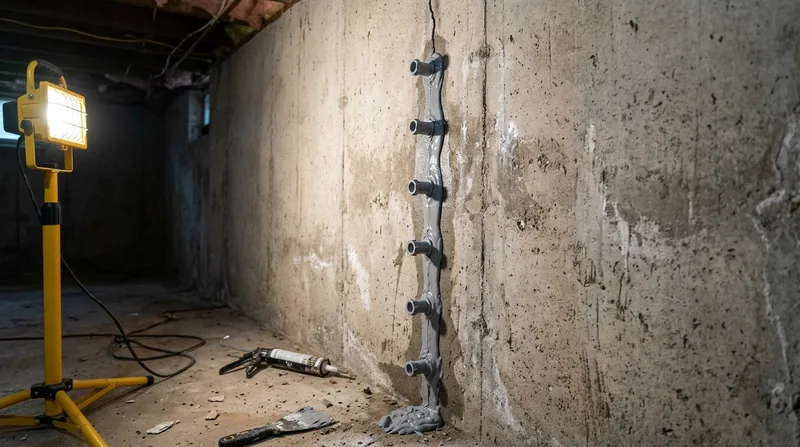
We start by reading the crack, not by reaching for a caulk gun. The width, direction, and location tell us whether epoxy injection, polyurethane injection, or a structural repair is the right call. Epoxy is rigid and restores structural integrity in non-structural cracks. Polyurethane stays flexible and seals cracks that move with freeze-thaw. Wider cracks from settling or frost get carbon fiber straps or wall anchors. Every step is documented so you know what went into your wall.
- We inspect the crack from inside and outside, check for efflorescence and moisture, and test the wall for movement.
- We clean the crack and install injection ports at the correct spacing for the crack width.
- We inject epoxy or polyurethane under pressure until the material reaches the far side of the wall.
- We seal the surface, remove the ports, and verify the repair with a water test where conditions allow.
- We check grading, downspout extensions, and the drain tile connection so the same water does not find a new path.
If the inspection shows that hydrostatic pressure is the real driver, we say so plainly and talk through an interior drain tile system rather than selling you a crack patch that will fail again.
Key info: A 1950s ranch in Turn of River had a diagonal crack at the corner that opened every February. We injected it with flexible polyurethane, extended the downspouts, and regraded the soil. Two winters later, no seepage.
Crack Repair Methods We Use and When Each One Fits
The method matters more than the brand of material. Here is how we match the repair to the crack and the wall type.
| Approach | Description | Best for |
|---|---|---|
| Epoxy injection | Rigid, high-strength injection that bonds the crack faces back together. | Non-structural shrinkage cracks in poured walls. |
| Polyurethane injection | Flexible foam that fills the crack and stays sealed as the wall moves. | Active leaks and cracks that move with freeze-thaw. |
| Carbon fiber straps | Structural straps anchored to the wall to resist inward movement. | Wider cracks and early bowing in block or poured walls. |
| Wall anchors | Exterior anchors pull the wall back toward plumb and hold it. | Bowing walls with horizontal cracks from soil pressure. |
| Mortar and parging repair | Replacing eroded mortar and parging on older masonry walls. | Fieldstone and brick foundations with joint erosion. |
We choose the method after the inspection, not before, because the wrong repair on a moving crack is money wasted.
Foundation Crack Repair Cost in Stamford: What to Expect
Most single-crack injection repairs in Stamford start at $450, and that covers the inspection, materials, and the injection itself. The price moves with crack length, wall thickness, access, and whether the crack is active or dormant. Fieldstone walls take more time than poured concrete because the mortar joints need separate attention. Structural repairs with carbon fiber or anchors are priced on site after we see the wall. Get two or three estimates and compare scope, not just the number. Our full breakdown is on the pricing page.
- Crack length and width determine how much material and how many injection ports the job needs.
- Wall type matters: fieldstone and brick take longer than poured concrete.
- Access to the crack, especially behind finished walls or mechanicals, affects labor time.
- Structural vs non-structural is the biggest swing, since straps and anchors add material and design work.
A fair estimate explains what is included and what would change the price, so you can compare apples to apples.
Finding a Foundation Crack Repair Contractor Near Me in Stamford
Ask three questions before you hire anyone: are you licensed and insured, what method will you use and why, and will you put the scope in writing. A contractor who cannot explain why epoxy versus polyurethane is right for your crack is guessing. Check references from Stamford jobs, especially older homes with fieldstone or brick walls. Confirm whether the work needs a permit from the local building department, since structural foundation repair often does. And get the certificate of insurance before work starts.
We are a dedicated basement waterproofing specialist, not a general foundation firm or a plumber, so our scope stays below grade and residential. Reach out through our contact page to schedule a free inspection and a written estimate.
Foundation Crack Repair in Stamford: Pricing Guide
| Service | Price | Details |
|---|---|---|
| Single crack injection (epoxy or polyurethane) | Starting at $450 | Includes inspection, injection ports, material, and surface seal for one non-structural crack. |
| Multiple crack injection | Starting at $750 | Priced per crack; total depends on crack length, wall thickness, and access behind finishes. |
| Structural repair (carbon fiber straps or wall anchors) | On estimate | Requires on-site evaluation of wall movement, crack width, and soil pressure before pricing. |
| Fieldstone or brick mortar repair | On estimate | Scope depends on joint erosion, wall area, and whether parging is needed after repointing. |
| Travel | Included | in Stamford and surrounding areas, no separate call-out or mileage fee. |
| Estimate | Free | Response within 24h at (475) 268-0034, no obligation to book. |
Indicative pricing, the exact cost depends on square footage, finish, and site access. Free personalized estimate within 24h at (475) 268-0034.


